
- Not sure if your siding can be repaired or needs to be replaced?
- FREE estimates are available for homeowners.
- 1. Know your limits
- 2. Inspect the damage up close
- 3. Look for signs of pests
- 4. Seek out the right tools for the job
- 5. Start with thorough cleaning
- 6. Prep the area you will be working on
- 7. Pry pieces off carefully
- 8. Know when repairs might not be enough
- Frequently Asked Questions (FAQs) About DIY Siding Repair
Andrew and Abby* upgraded to vinyl siding seven years ago, and things could not be better. Their house got a boost in curb appeal while the couple started enjoying the benefits of lower energy bills, fewer pest intrusions, and the simple knowledge that they did not have to worry about constant upkeep and maintenance. But as durable as their vinyl siding was and still is, a significantly harsh winter followed by heavy rains, damaging wind, and hail left a few small cracks and loose panels behind. Nothing major, but certainly a reminder that even the toughest house siding material needs attention from time to time. But that left one question lingering in their minds: “Do we hire a contractor to fix it, or do we roll up our sleeves for a little DIY siding repair?”
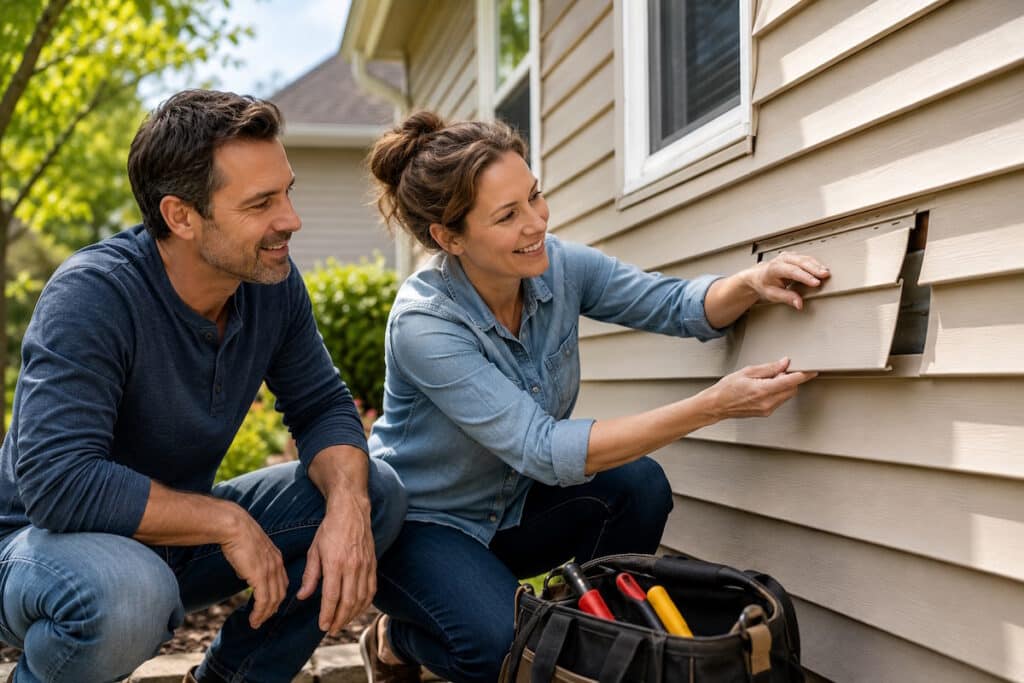
While large storm damage, moisture issues, or significant structural problems need to be handled by a professional siding contractor, some minor siding repairs can be handled by the homeowner with the right tools and a little patience. In fact, homeowners can repair minor vinyl siding damage by removing the damaged panel, installing a matching replacement piece, and securing it properly.
DIY Siding Repair Quick Answer: Homeowners can repair minor vinyl siding damage when it is limited to one or two panels and there is no underlying moisture or structural damage. Small cracks, loose panels, and minor cosmetic issues are often DIY-friendly with the proper tools. However, widespread damage, mold, rot, or storm-related structural issues should be inspected by a professional siding contractor.
Why Does Siding Damage Happen in Dallas?
We probably do not have to remind you that while living in the Dallas-Fort Worth area has more than its fair share of perks, the trade-off is that homeowners will inevitably face unique weather conditions that can wear down and even damage the toughest and most reliable exterior siding. Sadly, that includes vinyl siding, which has become a popular choice due to its durability and low-maintenance features, but still requires occasional cleaning to prevent dirt, mold, mildew, grime, and other nasty stuff from accumulating. On top of that, wear and tear such as the examples above are rarer but still possible given how fickle and unrelenting Mother Nature can be.

National Resource: According to the Vinyl Siding Institute (VSI), properly installed vinyl siding requires relatively little maintenance, but homeowners need to inspect siding periodically and repair damaged sections promptly to help prevent moisture intrusion and extend the life of the exterior.
Here are just a few reasons why siding repair is often necessary in North Texas:
- Intense heat and UV exposure — Long summers that feel like we are living on the surface of the sun can cause vinyl siding to crack and possibly warp over time. This is especially true after repeated exposure.
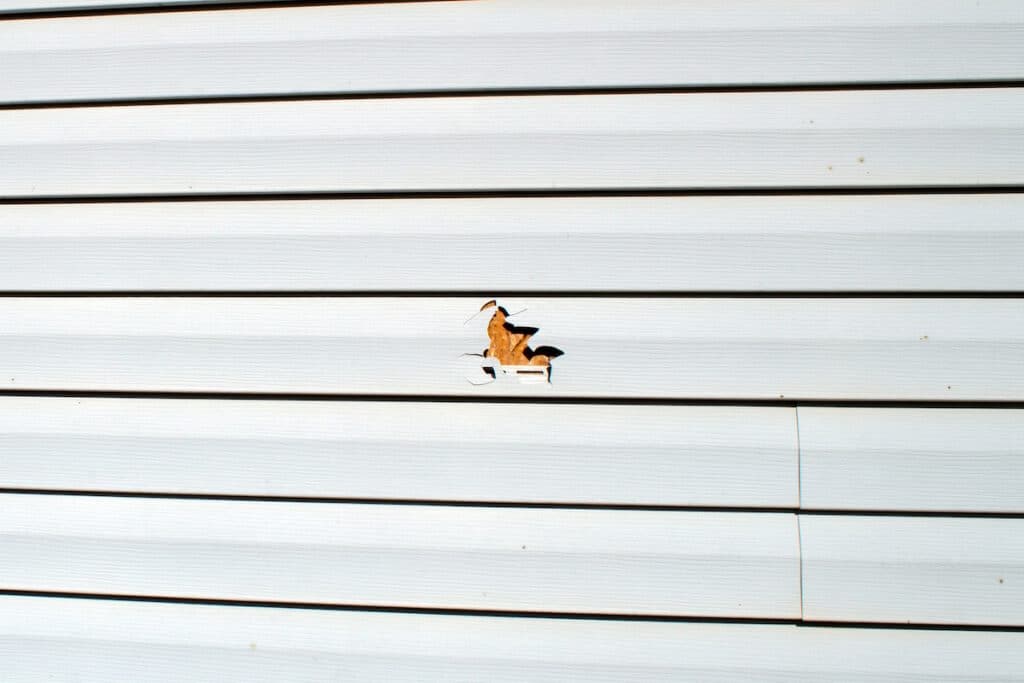
- Hail and severe storms — Small hail likely won’t do any damage to vinyl siding, but as summer weather reports have shown, many homeowners dealt with golf-ball and baseball-sized hail in many parts of DFW. The larger the hail gets, the greater the impact, which can lead to cracks, chips, holes, and loose panels.
- High winds — Vinyl siding is a wonderful choice because it withstands high winds better than traditional siding. That said, consistent and unrelenting wind gusts can pull siding loose around corners, rooflines, and edges.
- Moisture and humidity — Though extremely rare on newer siding, older siding can trap moisture behind exterior walls and cause mold, mildew, rot, and structural damage if left untreated for too long.
Did You Know? According to the Federal Emergency Management Agency (FEMA), repairing storm damage promptly can help reduce additional water intrusion and reduce the likelihood of more expensive repairs later. After severe weather, even small exterior problems should be inspected before they worsen.
What to look for when inspecting your home for damaged siding and possible DIY siding repairs:
- Cracks or gaps
- Warped appearance
- Bubbles underneath the siding
- Rot
- Fading
- Loose or missing siding panels
- Visible mold or mildew growth
- Issues inside the home
The goal is to address damaged siding before water has an opportunity to reach the structure behind your exterior walls, where repairs become much more expensive. Even small gaps or loose siding panels can allow air and moisture to enter behind your exterior walls, potentially reducing your home’s energy efficiency over time.
Can Homeowners Repair Vinyl Siding Themselves?
Depending on the extent of the damage and the accessibility of potential repairs, yes. And there are many benefits to doing so. One benefit is that you can save money with DIY siding repair. But on top of that, repairing minor issues and performing routine maintenance keeps your siding looking brand-new longer, extends its lifespan, deters pests, and can help prevent more costly repairs later.
“Minor siding damage is usually inexpensive to repair—but waiting too long can turn a simple fix into a major replacement project.”
Experts typically recommend taking a thorough, detailed look at your vinyl siding at least once a year. This includes walking your property from all angles to spot potential repairs and issues that need attention. This is especially true if you have a lot of trees around your home and live in an area that experiences significant weather patterns. Hello, North Texas! In those instances, you may need to clean and handle smaller DIY siding repairs twice a year.
But how do you know when DIY siding repair is appropriate versus when you need to hire a contractor?
Generally, DIY siding repair is usually appropriate when:
- Damage is limited to one or two panels
- No signs of structural damage
- Repair areas are reachable, not dangerous
- You have the tools to handle the repairs
DIY siding repair becomes risky or less realistic when:
- Large sections are damaged
- Mold or rot is present
- There is hidden damage beneath the panels
- Repairs require working at dangerous heights
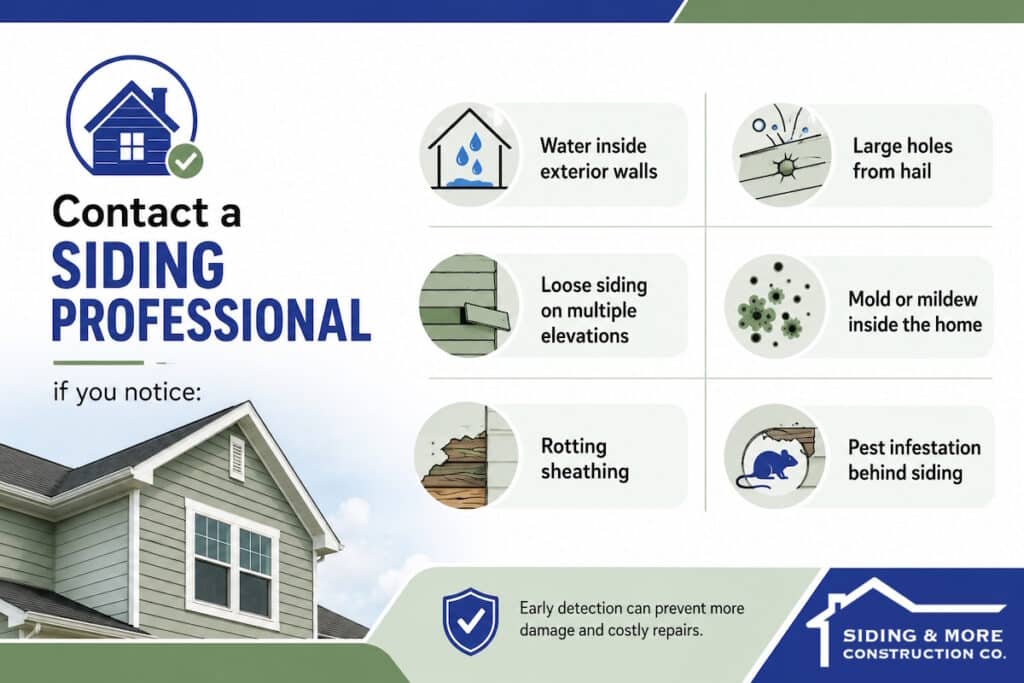
Contact a siding professional if you notice:
- Water inside exterior walls
- Large holes from hail
- Loose siding on multiple elevations
- Mold or mildew inside the home
- Rotting sheathing
- Pest infestation behind siding
DIY Siding Repair: 8 Tips You Need To Know
If you believe DIY siding repair is the answer, a little preparation can make the process much smoother. The key is to work carefully, use the proper materials, and avoid rushing through the repair. Even a small mistake—such as installing panels too tightly, failing to properly secure seams, or not using the right tools—can lead to bigger issues.
Here are eight tips and tricks we suggest for DIY siding repair.
1. Know your limits
Before starting, it is good to know if you feel comfortable with the potential repairs you will need to make. Minor cosmetic damage is often manageable for homeowners, but repairs involving moisture intrusion, widespread storm damage, or hard-to-reach areas—like working on second-story siding or near electrical service lines—are usually better left to professionals.
2. Inspect the damage up close
Carefully evaluate the affected area to determine whether the damage is cosmetic or more severe. Look for signs of moisture, soft spots, mold, or damage beneath the surface.
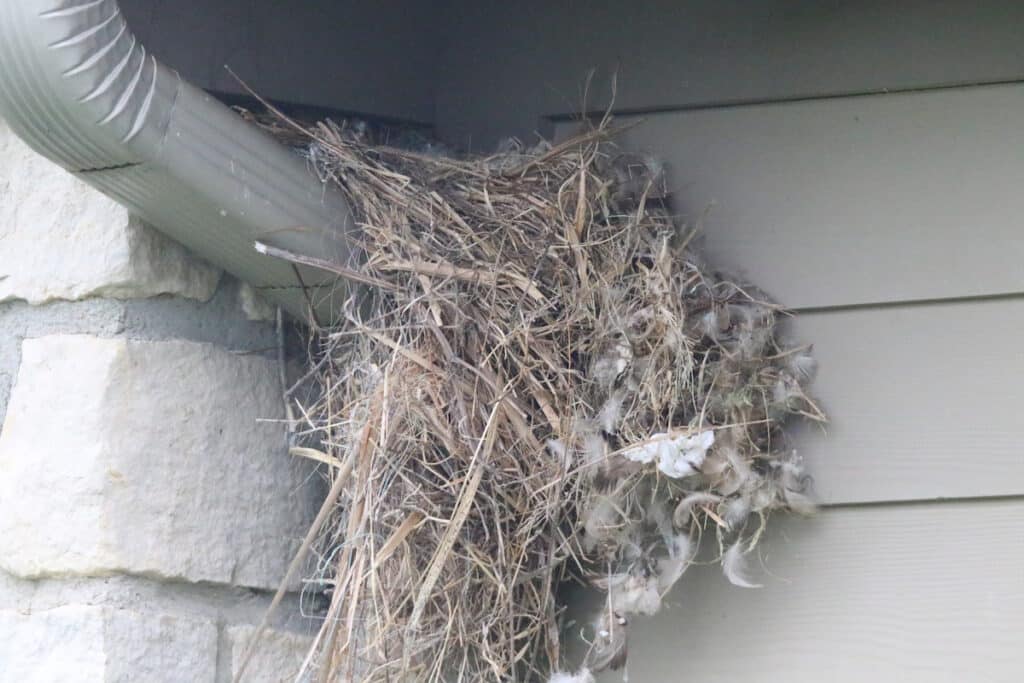
3. Look for signs of pests
Many pests, such as squirrels, raccoons, and rats, are relentless and could find a soft spot somewhere that you may not have seen at first. Look in the corners of the siding and under the eaves for potential damage. Examples might include small holes, chipped edges, scratch marks, and nest activity. We stress this step because what appears to be small, easy fixes might require pest control services or more professional vinyl siding repairs than you can normally do yourself.
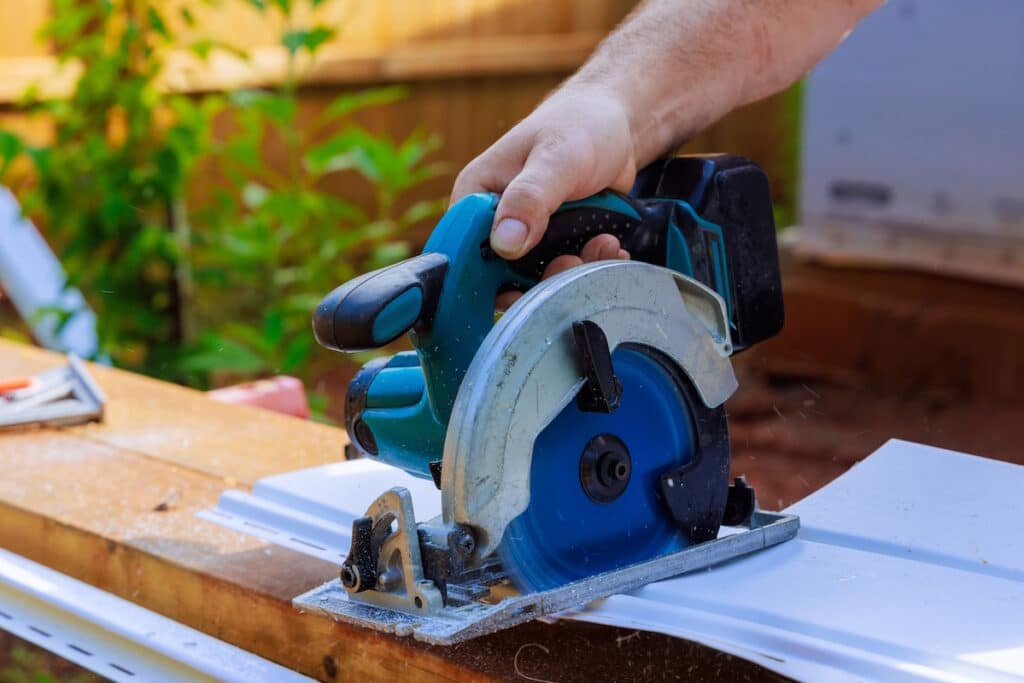
4. Seek out the right tools for the job
The last thing you want to do is get into the middle of what should be an easy repair and realize you do not have the right tools to finish it the right way. What tools you will need depends largely on what you are fixing. But a short list of common tools to have at your fingertips includes, but is not limited to, a hammer or pry bar, utility knife, sandpaper, putty knife, exterior filler, tape measure, ladder, nail puller, galvanized siding nails, exterior-grade caulk, waterproof flashing tape, safety gloves, cleaning materials, and safety glasses. If you are replacing panels, it is wise to match your current siding color.
5. Start with thorough cleaning
Dirt, mildew, and debris often hide the true extent of damage. So, before making any repairs, grab a garden hose to clear away dirt, pollen, and mildew. Doing this will also allow you to clearly see smaller cracks, holes, and loose seams. Make sure to set it on a low setting and mix in a gentle cleaning solution, but do not feel like you must dedicate the entire day to this task.
6. Prep the area you will be working on
If you simply need to patch holes and cracks, remove all loose, rotted wood with a scraping tool first. It is also important to sand the edges. This way, any wood filler, caulking, patching, and painting you do will blend in and remain flush with the surrounding vinyl.
7. Pry pieces off carefully
If you are replacing full panels, take your time to gently cut away old caulk and remove old nails so that panels come off easily. The last thing you want to do is damage anything underneath. From there, measure and cut the new siding to fit the open slot and secure it tightly but not overly tight. Vinyl siding is designed to expand and contract as temperatures change. If you secure new panels too tightly, you risk panel warping or buckling over time.
8. Know when repairs might not be enough
If you notice widespread cracking, recurring moisture issues, rising energy bills, or siding damage across multiple walls, simple spot repairs may only provide a temporary fix. In those cases, a professional siding contractor can help determine whether partial or full replacement is the better long-term solution.
Did You Know: According to the U.S. Environmental Protection Agency (ENERGY STAR), a well-ventilated attic helps move super-heated air out of the attic during summer while removing excess moisture. Proper soffit ventilation helps protect roofing materials and contributes to a healthier, more energy-efficient home.
Annual Vinyl Siding Maintenance Checklist
☐ Walk around the home and inspect every wall
☐ Look for cracked or loose siding panels
☐ Check around windows and doors
☐ Inspect corners and rooflines
☐ Wash away dirt and mildew
☐ Look for insect or animal activity
☐ Inspect after hailstorms or high winds
Frequently Asked Questions (FAQs) About DIY Siding Repair
Siding and More Is Here When DIY Siding Repairs Aren’t Enough
Many minor siding repairs can be completed in a few hours, depending on the size and accessibility of the damaged area. That said, there may come a time when repairs are much bigger than you anticipated, or trying to handle them yourself would be too dangerous. That is when Siding and More Construction Company can help. We are believers in the seemingly endless benefits of vinyl siding, and our vinyl siding installation process is second to none.
At Siding and More Construction Company, we offer a range of vinyl siding options designed to withstand the unique Texas climate. With nearly 40 years of experience in the Dallas area, our experts are ready to help you select the ideal siding for your home, ensuring its durability and enhancing its curb appeal. That includes ensuring our customers have chosen the right materials for their style, taste, and home needs, and then following up with precise installation techniques so that the job is done right the first time.
Request a consultation to discover how we can enhance your home’s exterior. We can confidently say that we take our time to collaborate with you and then use best-in-class materials and top-flight industry knowledge to ensure your installation goes off without a hitch. To get started, call us at 972-636-3513 or contact us for a free estimate with the form below.
"*" indicates required fields
Siding and More Construction Company serves the North Texas area including these cities in the Greater Dallas metroplex and more: Addison, Allen, Arlington, Canton, Carrollton, Cedar Hill, Dallas, Desoto, Duncanville, Farmers Branch, Forney, Garland, Greenville, Lancaster, McKinney, Mesquite, Plano, Richardson, Rockwall, Rowlett, Irving, Terrell, Royse City and nearby areas.
*Customer names and/or photos may be changed to protect privacy.