
- What Temperature Does Vinyl Siding Melt?
- What Causes Vinyl Siding to Melt?
- How Can I Tell if My House Siding Has Heat Damage?
- 6 Ways to Stop Vinyl Siding From Melting
- Can Melted Vinyl Siding Be Repaired?
- Frequently Asked Questions (FAQs) About vinyl siding melting
- Keep Your Dallas Siding Looking Its Best All Year With Siding and More
Most North Texas homeowners have seen it at least once: a section of vinyl siding that looks rippled, wavy, or sunken in, as if someone held a hair dryer to it. It is not your imagination, and in most cases it is not a defect in the siding. Vinyl is tough, low-maintenance, and built to handle Texas weather, but it does have a heat limit, and a few everyday situations can push it past that point.
Our summers do not make it easy. Dallas-Fort Worth logged a record 71 days of 100-degree heat in 2011, according to the National Weather Service, and triple-digit stretches are part of life here. The good news is that melted siding is almost always preventable. Here is what causes it, how to spot it, and six simple ways to protect your home’s vinyl siding from melting.
Vinyl siding starts to soften and warp at about 160 to 165 degrees Fahrenheit, and the two most common causes are sunlight reflected off nearby windows and grills placed too close to the house. Blocking that reflected light with screens, awnings, or landscaping and moving heat sources away from your walls prevents most damage.
What Temperature Does Vinyl Siding Melt?
Vinyl siding does not actually turn to liquid. Instead, it softens, warps, and distorts once its surface reaches about 160 to 165 degrees Fahrenheit, according to a National Association of Home Builders (NAHB) report shared by Massachusetts building officials. Direct sunlight alone rarely gets siding that hot, even in August. The trouble starts when extra heat gets concentrated on one spot.
Color plays a part, too. The darker your house siding, the more heat it absorbs from direct sun, and darker shades soften before lighter ones.
Heat from sunlight reflected off double-pane, low-E windows “has been measured in excess of 200 degrees Fahrenheit.”
What Causes Vinyl Siding to Melt?
There are two main culprits, and one of them surprises most homeowners.
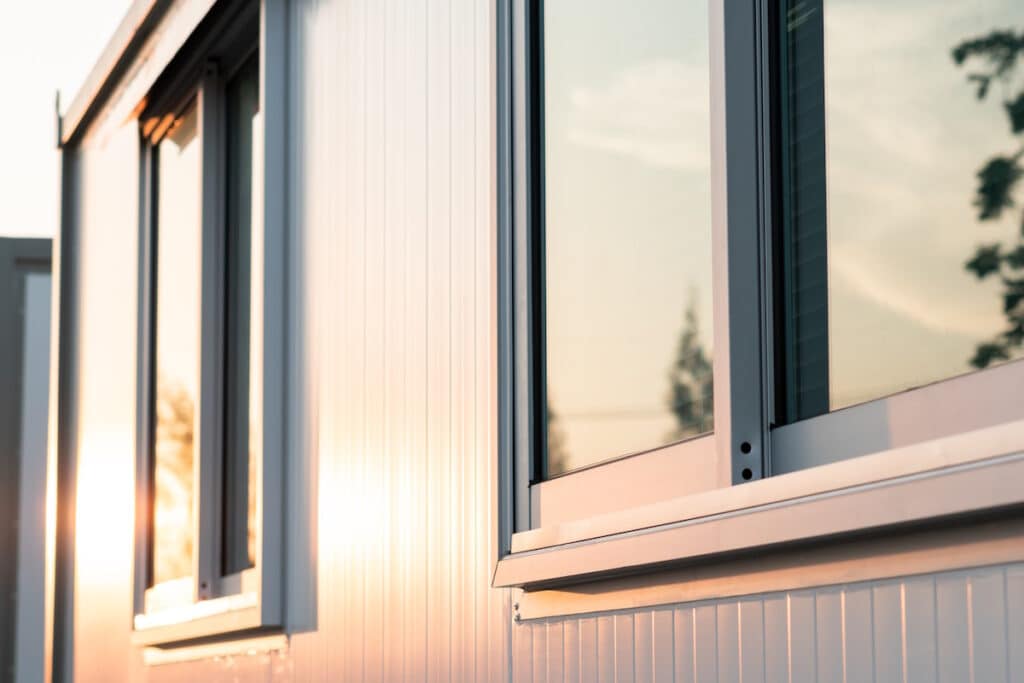
Sunlight reflected off windows. This is the number one cause. Energy-efficient double-pane windows with low-E coatings are designed to bounce solar heat away from your home, which is great for your cooling bill. But the glass in an insulated window can bow slightly inward, creating a curved surface that focuses reflected sunlight much like a magnifying glass, according to the Polymeric Exterior Products Association. When that concentrated beam lands on a nearby wall, the house siding can get far hotter than direct sun alone would make it.
The window can be on your own home, such as across an L-shaped corner or patio, or on your neighbor’s house. That is common in DFW neighborhoods where homes sit just a few feet apart. Because it depends on the angle of the sun, this kind of damage often shows up at certain times of year. NAHB notes that the low sun angle of late fall, winter, and early spring plays a role, so a wall that looked fine all summer can suddenly develop a warped streak in November.
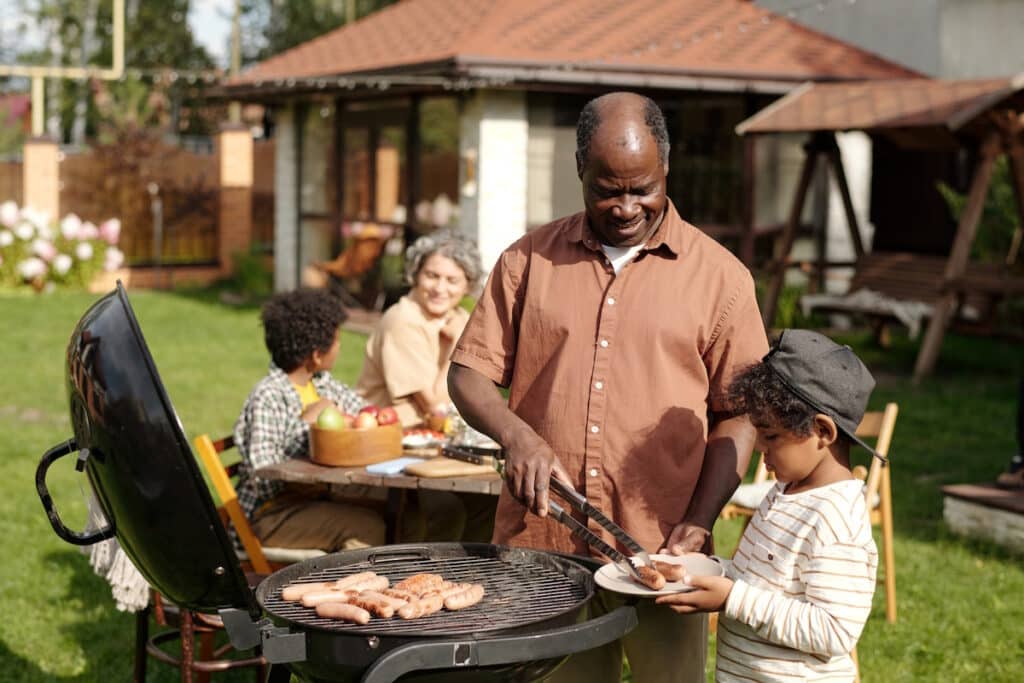
Grills and other heat sources. Grilling on a deck or patio right next to the house is convenient, but the heat rolling off a grill can warp vinyl siding in a single cookout. Smokers, fire pits, and patio heaters can do the same. It is also a fire safety issue. U.S. fire departments responded to an average of 12,141 home fires involving grills, hibachis, or barbecues each year from 2020 to 2024, according to the National Fire Protection Association (NFPA).
12,141—the average number of home fires involving grills, hibachis, or barbecues each year in the U.S. (2020 to 2024).
How Can I Tell if My House Siding Has Heat Damage?
Walk around your home on a sunny afternoon and look for:
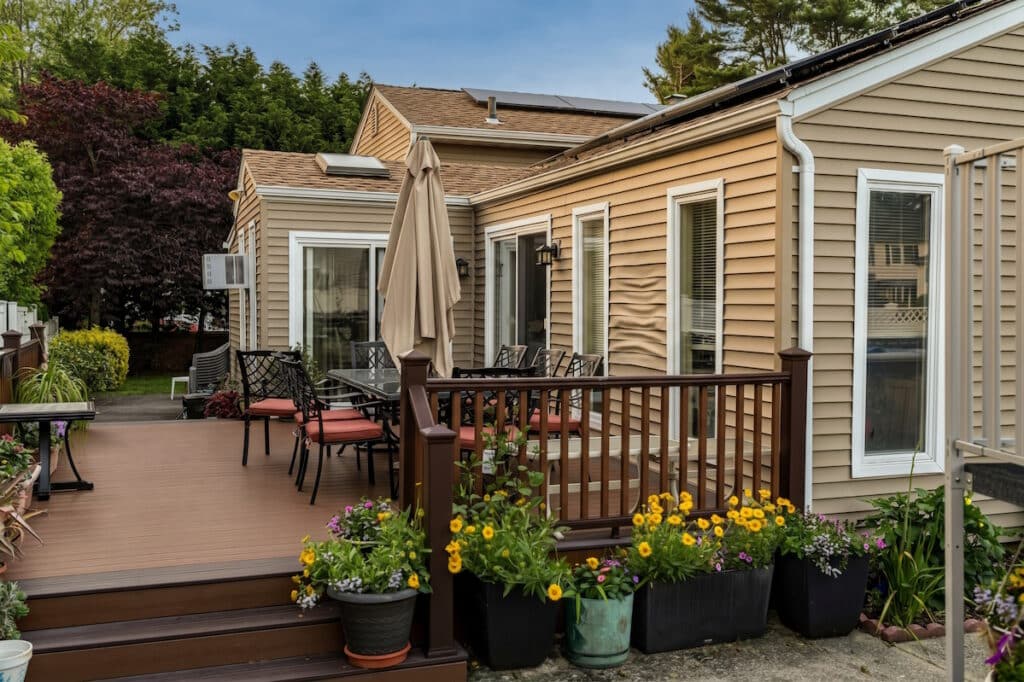
- Wavy, rippled, or sagging panels in one patch or narrow streak
- Panels that look sunken or pulled in compared to the rest of the wall
- Shiny, discolored, or faded spots in an otherwise even wall
- Warping near a grill area, fire pit, or across from a large window
Warping can also come from moisture or loose installation, so it is worth having a pro take a look. Our post on signs your home needs siding repair covers other red flags to watch for.
6 Ways to Stop Vinyl Siding From Melting
- Block reflected sunlight with screens. If the reflection comes from your own windows, add exterior window screens or solar screens. According to the Polymeric Exterior Products Association, “Screening applied to windows may reduce the total amount of reflected energy sufficiently to avoid the problem.” Solar screens are already popular in North Texas for cutting heat gain, so this fix can pull double duty.
- Add awnings or sunshades over the problem window. An awning stops sunlight before it reaches the glass, so there is nothing to reflect. This works well for windows on south- and west-facing walls.
- Plant a buffer between homes. If a neighbor’s window is the source, you cannot add a screen to their house, but you can break up the reflection. Trees, tall shrubs, a fence, or a trellis between the two homes can block the beam. Leave some space between plants and your siding so air can circulate and moisture does not get trapped.
- Choose lighter colors for sun-baked walls. Lighter siding absorbs less heat from direct sun. Color alone will not stop reflected-sunlight damage, though, because both light and dark siding can be affected, so pair it with screens or shade where reflection is the problem.
- Invest in quality siding and replace aging panels. Older siding that is near the end of its life is more vulnerable to heat damage. If you are replacing your siding, ask about premium products designed for heat and color retention, especially if you have your heart set on a darker color. Explore our vinyl siding options to see the brands we install.
- Grill at least 10 feet away from your house. The NFPA recommends placing your grill well away from your home, deck railings, eaves, and overhanging branches. We recommend at least 10 feet from your siding as a rule of thumb. The same goes for smokers and fire pits, and let a hot grill cool completely before you roll it back against the house.
Heat Damage Fixes at a Glance
• Reflection from your own windows—add exterior screens, solar screens, or awnings
• Reflection from a neighbor’s windows—plant trees or shrubs, or add a fence or trellis
• Grills, smokers, and fire pits—keep them at least 10 feet from your siding
• Hot, sunny walls—choose lighter colors and quality, heat-resistant siding
Can Melted Vinyl Siding Be Repaired?
Yes. In most cases, a professional can remove the damaged panels and replace them without redoing the whole wall. Just be sure to fix the heat source first, or the new panels can warp the same way. Matching color can be tricky on older siding that has faded, which is another reason to call a pro. If you like to handle small jobs yourself, our DIY siding repair tips explain when a repair is a weekend project and when it is time to call us.
It is also worth knowing that siding warranties generally do not cover damage from concentrated reflected sunlight, since manufacturers treat it as an outside condition rather than a product defect. Check your warranty or ask the manufacturer for details.
Frequently Asked Questions (FAQs) About vinyl siding melting
Keep Your Dallas Siding Looking Its Best All Year With Siding and More
You made a wise choice when you chose Siding and More Construction Company to install your new siding. Vinyl siding is one of the leading siding materials in the world and promises to live up to expectations for many years to come. That said, it is understandable that you would want to ensure it is ready for whatever Mother Nature throws at us.
With the Texas weather throwing us a curveball, there are a few tips and tricks you can do right now to ensure your Dallas siding is in the best shape possible. If you are not sure what you are looking for and need professional guidance, we can help with a professional inspection.
Investing in high-quality vinyl siding for your Dallas home provides a durable, low-maintenance, and aesthetically pleasing exterior. At Siding and More, we offer a wide range of vinyl siding options tailored to withstand the Texas climate. With nearly 40 years of experience in the Dallas area, Siding and More Construction Company is one of the best siding contractors around.
Ask for a consultation and to discover how we can enhance your home’s exterior. To get started, call us at 972-636-3513 or contact us for a free estimate with the form below.
"*" indicates required fields
Siding and More Construction Company serves the North Texas area including these cities in the Greater Dallas metroplex and more: Addison, Allen, Arlington, Canton, Carrollton, Cedar Hill, Dallas, Desoto, Duncanville, Farmers Branch, Forney, Garland, Greenville, Lancaster, McKinney, Mesquite, Plano, Richardson, Rockwall, Rowlett, Irving, Terrell, Royse City and nearby areas.
*Customer names and/or photos may be changed to protect privacy.