
- What Is the Difference Between Fiber Cement and Vinyl Siding?
- How Do Fiber Cement and Vinyl Siding Compare?
- Which Siding Holds Up Better to North Texas Weather?
- So, Which Siding Is Right for Your Dallas Home?
- Contact the Professionals
- Fiber Cement or Vinyl? Siding and More Will Help You Choose the Right Siding
There are so many options to consider when you are in the market to upgrade the siding on your home. Two of the top choices are fiber cement siding and vinyl siding, and to be completely honest, you really cannot go wrong with either one. Both improve your home’s appearance and protect its exterior. Still, a decision must be made in the fiber cement siding vs. vinyl siding debate, and it is only natural to want the one that best matches your budget, style, comfort preferences, and long-term needs. In other words, which one will work best for you and your home?
This article compares fiber cement siding and vinyl siding on the four factors that matter most when buying home siding—looks, durability, cost, and energy efficiency. Then it looks at how each one holds up to North Texas hail and heat, so you can make the right call with confidence.
For most Dallas homeowners, vinyl siding is the better overall value: it costs less, needs less upkeep, and insulated vinyl outperforms fiber cement on energy efficiency. Fiber cement costs more up front but offers greater impact and fire resistance and a higher return at resale, so it can be worth the investment if those are your top priorities.
What Is the Difference Between Fiber Cement and Vinyl Siding?
Siding is the protective material installed over the outside walls of your house. It plays a vital role in both looks and function: it shields your home from the elements, boosts curb appeal, and can improve energy efficiency. There are many materials to choose from, including wood, stucco, and aluminum, but two of the most popular are fiber cement and vinyl.
Vinyl siding is an engineered plastic cladding made primarily from polyvinyl chloride (PVC) resin. It remains the most common siding on new single-family homes. In 2023, vinyl was used on 25.6% of new single-family homes started, according to the National Association of Home Builders (NAHB). It is a favorite for both new construction and siding replacement, on everything from starter homes to luxury homes.
Fiber cement is made primarily from a mixture of cement, sand, cellulose fibers, and water. It is designed to resemble wood, one of the most traditional siding looks there is, and it has been steadily gaining ground. Fiber cement was used on 21.7% of new single-family homes started in 2023, up five percentage points over the previous 10 years, NAHB reports.
How Do Fiber Cement and Vinyl Siding Compare?
So, which one wins for your home? Here are the a few factors to weigh.
Looks
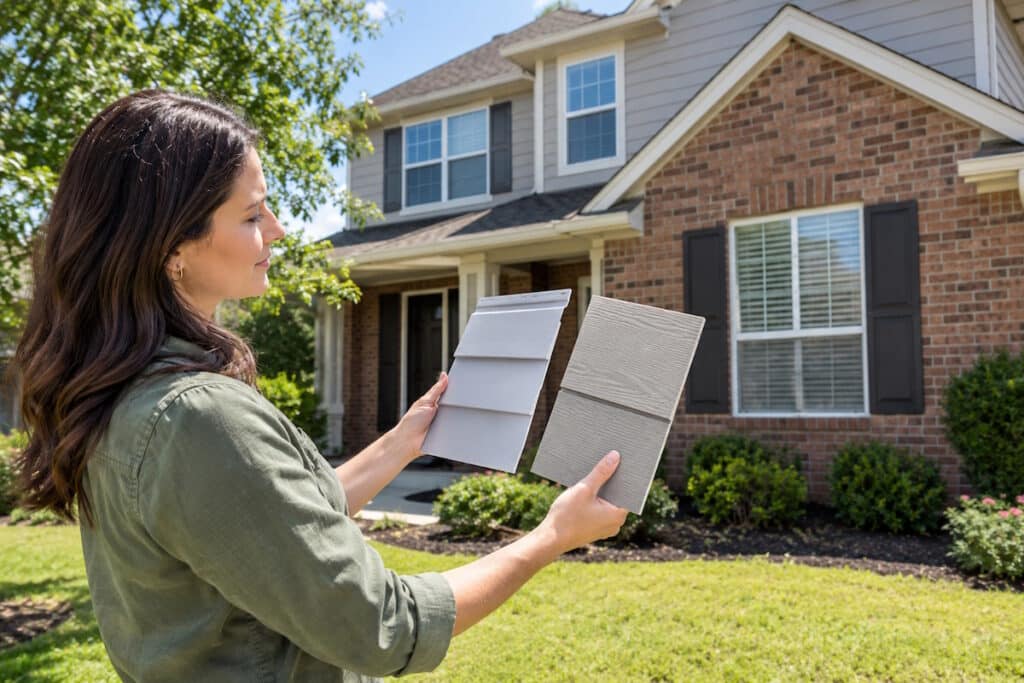
Fiber cement siding, like James Hardie’s HardiePlank, is known for its durability and for having a more natural look than traditional vinyl siding styles. It is often designed to resemble wood, smooth sand, or stucco, with organic patterns in either classic or modern styles. It can come prefinished in the color of your choice, or primed and ready to be painted in virtually any color imaginable. That range of looks makes fiber cement a strong choice for homeowners who want more options than traditional vinyl siding offers.
Vinyl siding also offers a significant range of textures and designs to bring character to your home’s exterior. While vinyl is not designed to be painted or stained the way fiber cement is, it comes in a wide range of factory colors and styles, including traditional lap, Dutch lap, scalloped, board and batten, beaded, and shakes. Premium vinyl is also more rigid, which allows for deeper embossing that mimics the look of natural wood or stone without the maintenance.
Durability
You may be surprised to hear that fiber cement siding, like HardieBoard, is about five times thicker than vinyl siding. Its thickness and cement-based makeup make it the more durable of the two. Fiber cement is also fire-resistant: it does not fuel a fire, although it does transfer heat. It resists moisture, rot, and pests, does not split the way wood siding can, and James Hardie engineers its products for specific climates, including hot, humid regions like ours.
Not to be outdone, quality vinyl siding lasts anywhere from 20 to 40 years, depending on conditions and how well it is cared for. It does not rot or need repainting, and premium vinyl siding is 40 times thicker than paint. Vinyl is also available in insulated versions with a rigid foam backing, and every certified vinyl siding product is tested for wind load resistance (more on that below).
Vinyl also wins on upkeep. An occasional rinse with a garden hose keeps it looking fresh, while fiber cement will eventually need repainting and periodic caulking to stay protected.
Cost
According to 2026 estimates from SidingCosts.com, fiber cement siding like HardieBoard costs about $6 to $13 per square foot installed. That puts a 2,000-square-foot home in a range of roughly $12,000 to $26,000. This Old House puts most fiber cement projects in a similar range of about $5 to $14 per square foot.
Standard vinyl siding costs about $3.50 to $7 per square foot installed, which would put the same 2,000-square-foot project at roughly $7,000 to $14,000, according to SidingCosts.com. Insulated vinyl siding runs about $5 to $9 per square foot, or roughly $10,000 to $18,000 for the same home.
Keep in mind that these are national estimates. Your final price will depend on the type of siding you choose, the size and layout of your home, local labor costs, and whether old siding needs to be removed first. The best way to know what your project will cost is a free, in-home estimate.
113.7%—the share of its cost that fiber cement siding replacement recouped at resale in 2025, compared with 96.5% for vinyl siding replacement (national averages).
Energy Efficiency
Beyond the upfront price, there is another place where cost matters: how much each option can save you on energy. R-value measures how well a material resists heat flowing in or out of your home—the higher the number, the better it insulates. Fiber cement siding adds very little R-value on its own, so while it is one of the most durable options, it does not beat insulated vinyl siding on energy efficiency. A fiber cement home’s energy performance depends heavily on the insulation and other layers in the wall behind it.
That said, fiber cement can be installed over rigid foam or other continuous exterior insulation to improve the wall’s thermal performance. According to the U.S. Department of Energy, a continuous layer of rigid insulation reduces heat loss through the wood studs, a problem known as thermal bridging.
Insulated vinyl siding builds that benefit right in. It incorporates rigid foam insulation, most commonly expanded polystyrene (EPS), permanently attached to the vinyl, so it provides continuous insulation over the wall and reduces thermal bridging, the U.S. Department of Energy explains. Certified insulated vinyl siding must have an R-value of at least 2.0, according to a DOE Building America presentation, and some products are rated higher depending on the foam backing.
Standard vinyl siding, on the other hand, adds little insulation on its own. So, while standard vinyl will not make a big difference in your energy bills, the insulated option can, especially in a climate with long, hot summers like ours.
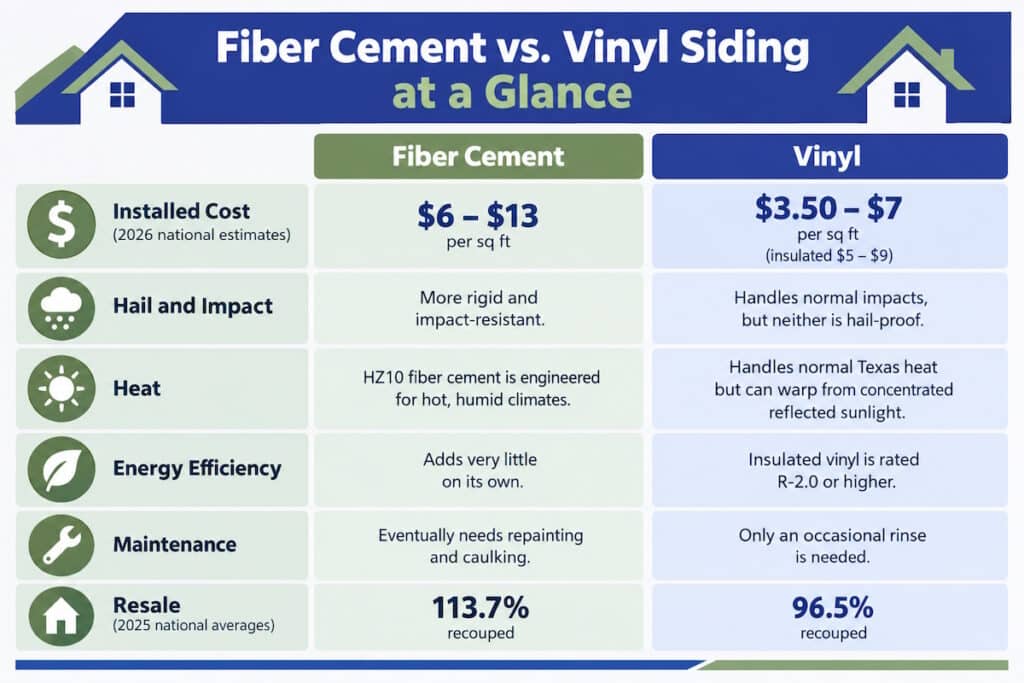
Fiber Cement vs. Vinyl Siding at a Glance
• Installed cost (2026 national estimates) — fiber cement about $6 to $13 per square foot; vinyl about $3.50 to $7 (insulated vinyl $5 to $9)
• Hail and impact — fiber cement is more rigid and impact-resistant; neither is hail-proof
• Heat — HZ10 fiber cement is engineered for hot, humid climates; vinyl handles normal Texas heat but can warp from concentrated reflected sunlight
• Energy efficiency — insulated vinyl is rated R-2.0 or higher; fiber cement adds very little R-value on its own
• Maintenance — vinyl needs only an occasional rinse; fiber cement eventually needs repainting and caulking
• Fire — fiber cement does not fuel a fire; vinyl can melt near high heat
• Resale (2025 national averages) — fiber cement recouped 113.7% of its cost; vinyl recouped 96.5%
Which Siding Holds Up Better to North Texas Weather?
The Dallas-Fort Worth area sees hot summers and severe thunderstorms, with large hail, damaging winds, flooding, and tornadoes nearly every year. Hail is one of the biggest concerns for local homeowners, and for good reason.
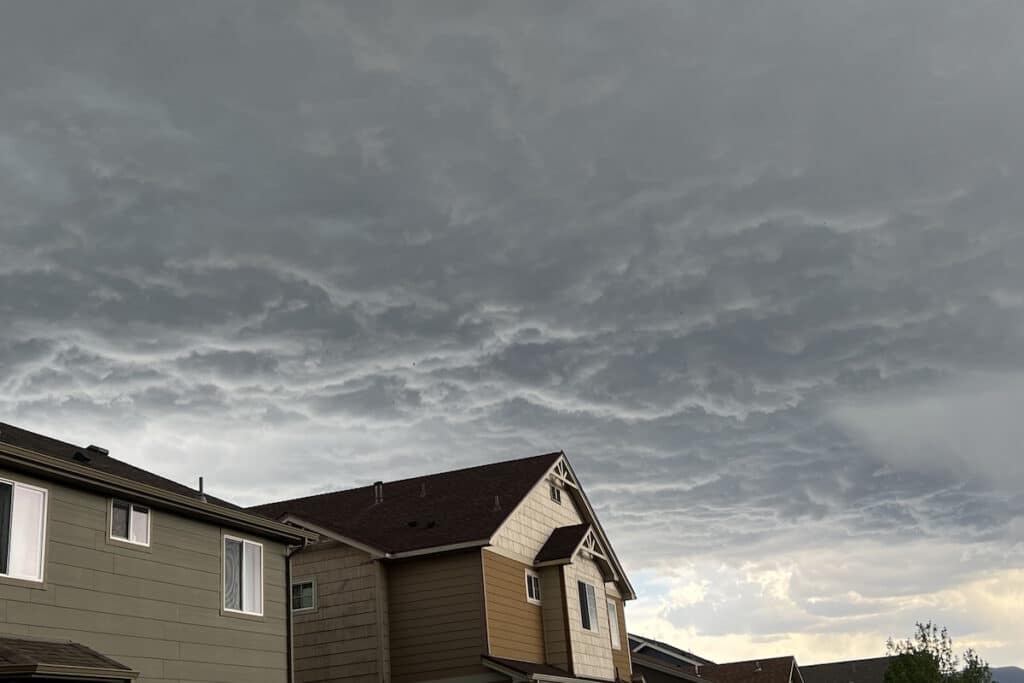
902—the number of major hail events (hailstones 1 inch or larger) recorded in Texas in 2025, more than any other state.
- Hail. Fiber cement siding is a rigid, impact-resistant material that can provide strong protection against hail. Vinyl siding is more flexible, and large hail can crack, chip, or dent it. Neither material is completely immune to hail damage, however, and the severity of damage depends on the size and speed of the hail, the siding product, and the quality of the installation.
- Wind. Vinyl siding holds its own here. “All certified vinyl siding is tested for wind load resistance and must meet certain minimum requirements,” according to the Vinyl Siding Institute, and certified products carry a design pressure rating based on that testing.
- Heat. James Hardie’s HardieZone system uses different formulations for different climates. HZ5 is made for climates with freezing temperatures, extreme seasonal temperature swings, snow, and ice. HZ10 is engineered for hot, humid regions with intense sun, severe storms, and high winds, and it is built to resist cracking, splitting, rotting, and swelling. Because Dallas has blistering summers, high humidity, and intense sun, HZ10 is the only correct James Hardie formulation for the Dallas-Fort Worth area, and installing HZ5 here voids the manufacturer’s warranty. In other words, choosing fiber cement in Dallas means choosing the right product for our climate, not just a material that looks good.
71—the record number of 100-degree days Dallas-Fort Worth logged in a single year (2011).
That does not mean vinyl siding will warp simply because Texas gets hot. Normal grades of vinyl siding begin to soften at about 160 to 165 degrees Fahrenheit, according to an NAHB report shared by Massachusetts building officials—far hotter than the air on even a 100-degree Dallas afternoon. The bigger concern is concentrated reflected heat, such as sunlight bouncing off a nearby low-E window, which can make one spot on the siding much hotter than the surrounding area, the Polymeric Exterior Products Association explains. This is a specific situation, not something every Dallas homeowner with vinyl siding can expect, and screens, awnings, or landscaping usually prevent it. Our guide on how to stop vinyl siding from melting covers the simple fixes.
So, Which Siding Is Right for Your Dallas Home?
Both materials can serve a Dallas home well for decades. Here is a simple way to decide:
- Choose vinyl siding if you want the best value, the lowest maintenance, a wide choice of factory colors and styles, and (with insulated vinyl) better energy efficiency.
- Choose fiber cement siding if your top priorities are hail and fire resistance, a wood-like look you can repaint, and resale value, and the higher upfront cost fits your budget.
Still not sure? A siding professional can look at your home, your neighborhood, and your budget and help you weigh the trade-offs. If vinyl is the right fit, the Siding and More Construction Company team specializes in it.
Contact the Professionals
If you are wondering whether to choose fiber cement siding or vinyl siding for your home renovation project, give us a call. We will walk you through 2026 pricing, our vinyl siding options, and how vinyl compares with fiber cement in North Texas weather, so you can decide with confidence what makes the most sense for your home and your family. We are happy to speak with you and to offer you a free quote!
Frequently Asked Questions (FAQs) About Fiber Cement Siding vs. Vinyl Siding
Fiber Cement or Vinyl? Siding and More Will Help You Choose the Right Siding
Choosing new siding is not always an easy decision on paper. Many factors play into it, including what makes the most sense for your home, your budget, and your plans. The good news is that in the fiber cement siding vs. vinyl siding debate, you really cannot go wrong with either material. Both offer tremendous benefits, and it is our job at Siding and More to help you make the best decision for your home. We are believers in the seemingly endless benefits of vinyl siding, and our vinyl siding installation process is second to none.
At Siding and More Construction Company, we offer a range of vinyl siding options designed to withstand the unique Texas climate. With nearly 40 years of experience in the Dallas area, our experts are ready to help homeowners from Arlington to Canton select the ideal siding for their homes, ensuring durability and enhancing curb appeal. That includes making sure you have chosen the right materials for your style, taste, and home needs, and then following up with precise installation techniques so the job is done right the first time.
Request a consultation to discover how we can enhance your home’s exterior. We take the time to collaborate with you, then use best-in-class materials and top-flight industry knowledge to make sure your installation goes off without a hitch. To get started, call us at 972-636-3513 or contact us for a free estimate with the form below.
"*" indicates required fields
Siding and More Construction Company serves the North Texas area including these cities in the Greater Dallas metroplex and more: Addison, Allen, Arlington, Canton, Carrollton, Cedar Hill, Dallas, Desoto, Duncanville, Farmers Branch, Forney, Garland, Greenville, Lancaster, McKinney, Mesquite, Plano, Richardson, Rockwall, Rowlett, Irving, Terrell, Royse City and nearby areas.
*Customer names and/or photos may be changed to protect privacy.